
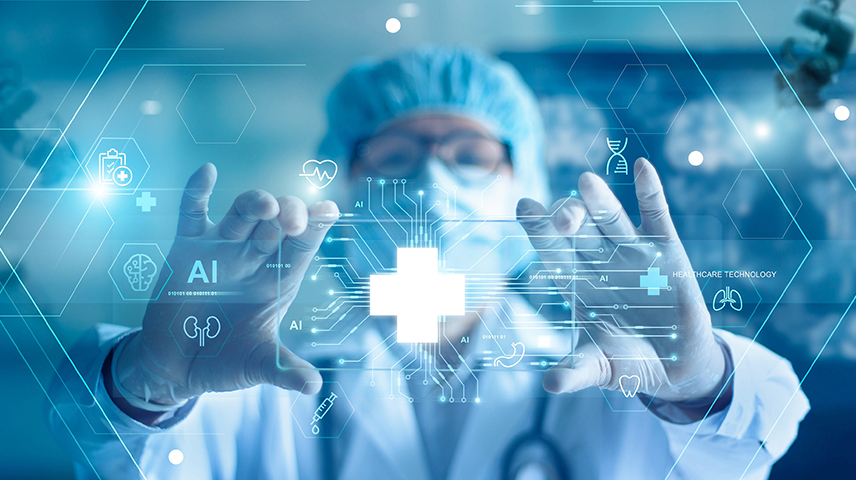
Artificial intelligence (AI) is no longer just a futuristic concept from science fiction. Recently, it has become one of the world’s most important tools, and healthcare is at the center of this transformation. AI is changing the way doctors, researchers, and patients think about healthcare. It can detect diseases earlier, tailor treatment plans, and streamline hospital operations. The application of AI in healthcare improves efficiency and makes it more accurate, accessible, and ultimately better for patients.
This article explores how AI is transforming healthcare today, the key innovations driving this transformation, and the future of medical technology.
Early Disease Detection
One of the most beneficial applications of AI in healthcare is its ability to detect diseases faster and more accurately than traditional methods. AI-powered diagnostic tools can analyze medical images, laboratory reports, and patient data to identify trends that people might otherwise miss.
For example, AI systems can detect diseases such as breast or lung cancer with high accuracy during medical exams. AI systems are also being used to diagnose diabetic blindness, heart disease, and even rare genetic disorders. When diseases are detected early, the chance of cure is greater and healthcare costs can be significantly reduced.
Personalized Treatment
Everyone is different and has unique needs. Artificial intelligence (AI) can develop unique treatment plans by analyzing a person’s genes, habits, and medical history. This is particularly important in oncology, where AI tools can help doctors choose the best treatment for cancer patients.
Another area where AI is making progress is pharmacogenetics, which uses DNA information to predict a person’s response to certain medications. By tailoring treatment plans to each individual, rather than using a one-size-fits-all approach, doctors can provide better treatment and reduce side effects.
AI in Imaging
Medical imaging is a vital part of modern healthcare, and AI is making it even better. Modern AI systems can quickly and accurately analyze X-rays, MRI scans, CT scans, and ultrasounds. These tools not only help doctors identify problems but also shorten the time needed to analyze images.
For example, AI is now being used in mammograms to detect breast cancer earlier and more accurately, reducing the number of false-positive results. In neurology, AI-powered imaging can help detect early signs of conditions like Alzheimer’s disease or stroke, enabling faster treatment.
Virtual Care Assistants
AI-powered virtual care assistants are becoming increasingly popular in homes, hospitals, and offices. These digital assistants can answer patient questions based on medical information, provide medication guidance, and offer health advice.
AI-powered chatbots and mobile apps can also help people with chronic conditions like diabetes or hypertension by monitoring their vital signs and suggesting lifestyle changes. By providing convenient care support, virtual assistants empower people to take control of their health, reducing unnecessary doctor visits.
Predictive Analytics
AI-driven predictive data is transforming the way hospitals and other healthcare institutions operate. AI can analyze massive data sets to predict hospitalizations, disease spread, and the populations most at risk of problems.
Using predictive analytics, hospitals can better staff departments, optimize resources, and improve patient outcomes. AI models can predict which patients may need readmission after discharge, allowing doctors to provide them with additional care and follow-up. This not only reduces hospital costs but also makes healthcare more efficient overall.
Drug Discovery
Traditional drug discovery methods are time-consuming, labor-intensive, and expensive. They can require years of research and billions of dollars. Artificial intelligence accelerates this process by analyzing vast amounts of data and identifying potential drug candidates more quickly.
AI tools played a crucial role during the COVID-19 pandemic, enabling them to quickly identify potential antiviral drugs and vaccine components. Pharmaceutical companies are now using AI to analyze chemical structures and ensure procedures are performed correctly.
Remote Patient Monitoring
Artificial intelligence is at the heart of the system, allowing doctors to examine patients remotely and view their health information in real time. Wearable technology and sensors with AI can monitor blood sugar levels, heart rate, and even sleep habits.
These tools are particularly useful for people with chronic conditions, as they allow doctors to act quickly when problems are detected. Remote monitoring not only improves patient safety but also reduces hospital visits, making access to care easier and more affordable.
Reducing Waste
AI not only improves patient care but also the business side of healthcare. By handling medical billing, automating record-keeping, and processing electronic patient records, AI reduces paperwork and speeds up processes.
By reducing paperwork, doctors and nurses can spend more time caring for patients. AI can also help prevent medical errors by verifying medication and ensuring patient data is managed correctly.
Ethics
AI has enormous potential, but it also raises ethical questions. Data protection, computer bias, and the need for human oversight are all important issues that require careful consideration. To build trust between patients and healthcare professionals, it is crucial that AI systems are transparent, fair, and secure.
To ensure that AI is used appropriately and helps everyone equally, healthcare institutions must establish strict regulations and ethical standards.
FAQs
1. How is AI different?
AI goes beyond automation by learning from data, identifying trends, and making predictions. This enables more advanced and specialized care than standard medical devices.
2. Can AI replace doctors?
No. AI is intended to support doctors and nurses, not replace them. It provides useful information and assistance, but human perception and understanding remain crucial in healthcare.
3. Is patient data secure?
Most healthcare institutions adhere to strict privacy and security regulations when using AI systems. However, continued efforts are needed to strengthen data security.
4. Role of AI in COVID-19?
During the pandemic, AI helped accelerate vaccine development, track the spread of the virus, and improve online patient registration. This suggests that AI could play a significant role in disaster relief.
5. What challenges exist?
Problems include high implementation costs, difficulties with data integration, and the need for clear regulations to address privacy and ethical issues.
Summary
There is no doubt that AI is transforming every aspect of healthcare, from early identification and treatment to hospital operations and drug development. AI is helping healthcare professionals worldwide provide better care to patients by improving speed, accuracy, and convenience.
While AI still presents some challenges, such as data protection and ethical concerns, its benefits far outweigh its risks. As the technology continues to develop, AI will play an increasingly important role in creating a healthier and more connected future.